
The Hidden Consequences of Missing Teeth
When a tooth is lost, the effects extend beyond aesthetics and function. The remaining teeth may take on additional pressure, leading to uneven wear and placing greater strain on the surrounding structures. Because each tooth plays a role in distributing the forces generated during chewing and clenching, even one missing tooth can disrupt this balance.
Replacing a missing tooth can help restore more natural function and reduce excessive stress on neighbouring teeth. Dental implants in Plymouth are one option that can closely replicate the role of a natural tooth, helping support both function and long-term oral health.
How Natural Teeth Distribute Chewing Forces
Natural teeth possess a remarkable anatomical feature known as the periodontal ligament, a thin layer of connective tissue that acts as a sophisticated shock absorber between tooth root and jawbone. This biological cushion allows teeth to move microscopically during biting and chewing, distributing forces evenly across the dental arch. Research demonstrates that healthy periodontal structures can absorb and dissipate significant occlusal forces, protecting both the teeth themselves and the underlying bone from damage.
When gaps exist in the dental arch, this elegant force distribution system breaks down. Adjacent teeth begin to drift into empty spaces, creating misalignments that concentrate pressure on smaller surface areas. The opposing teeth, lacking proper contact points, may over-erupt from their sockets, further destabilising the bite. Meanwhile, the remaining teeth endure increased mechanical stress with each meal, gradually wearing down enamel surfaces and potentially cracking under sustained pressure.
The Biomechanical Advantage of Implant-Supported Restorations
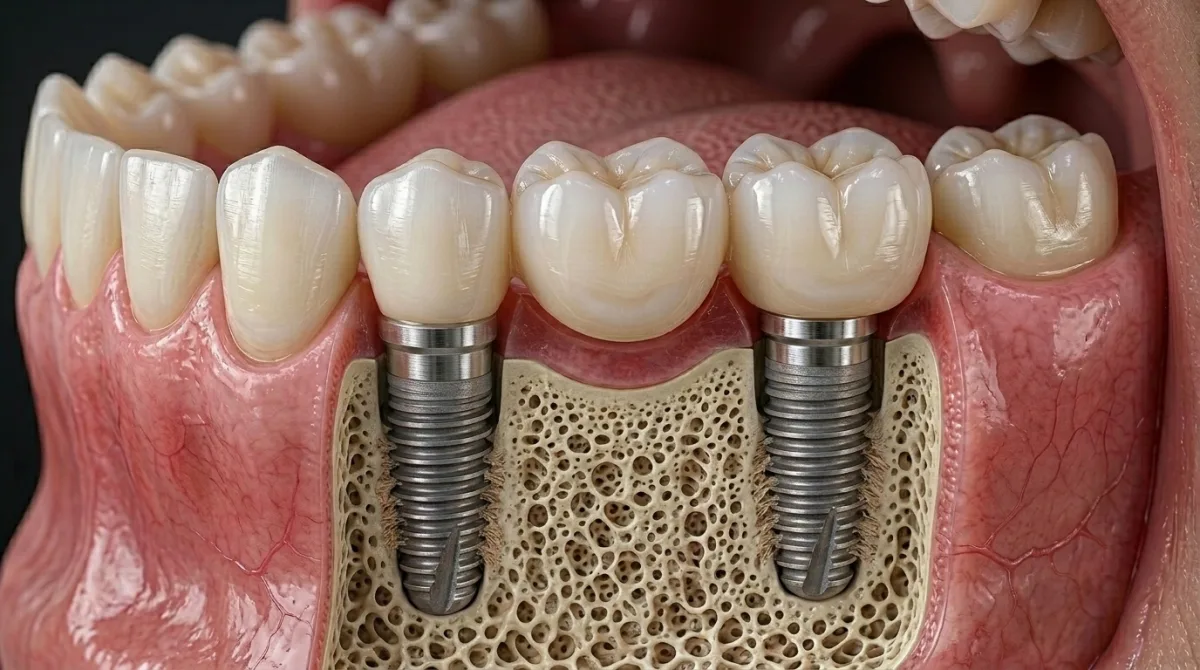
Unlike traditional bridges or dentures, dental implants in Plymouth and elsewhere restore not just the visible crown but the crucial root structure as well. This fundamental difference transforms how forces travel through the mouth during normal function. The titanium post integrates directly with the jawbone through a process called osseointegration, creating a stable foundation that mimics natural tooth roots in their load-bearing capacity.
The presence of an implant-supported restoration prevents the domino effect of dental deterioration that typically follows tooth loss. By occupying the space where a natural tooth once stood, the implant maintains proper spacing throughout the arch, preventing neighbouring teeth from drifting or tilting. This preservation of alignment ensures that bite forces continue to distribute across multiple contact points rather than concentrating on a few overworked teeth.
Protecting Adjacent Teeth from Overload
Traditional dental bridges require grinding down healthy adjacent teeth to serve as anchor points, permanently altering their structure and increasing their vulnerability to decay and fracture. In contrast, implant-supported crowns stand independently, requiring no modification of neighbouring teeth. This preservation approach means that adjacent teeth continue functioning within their normal parameters, experiencing appropriate rather than excessive loading during daily activities.
Furthermore, the rigid nature of osseointegrated implants provides a different mechanical response compared to natural teeth. The biomechanical differences between implants and natural teeth mean that implants absorb forces directly through the bone rather than through periodontal ligaments. This characteristic actually helps shield adjacent natural teeth from excessive lateral forces that might otherwise contribute to their premature wear.
Preserving Bone Density and Structural Support
Another often overlooked benefit lies in bone preservation. When tooth roots disappear, the surrounding jawbone begins to resorb, losing both height and width. This bone loss undermines the support structure for adjacent teeth, making them more susceptible to mobility and eventual loss. Dental implants in Plymouth provide the mechanical stimulation that bone tissue requires to maintain its density, effectively halting the resorption process and maintaining a stable foundation for neighbouring teeth.
The superior force distribution offered by implants becomes particularly evident in posterior regions, where molars generate crushing forces exceeding 200 pounds per square inch. Understanding these biomechanical forces helps explain why implant-supported restorations in these high-stress areas prove so effective at preventing accelerated wear on surrounding dentition.
Preserving Your Natural Smile for the Long Term
The decision to replace missing teeth with dental implants in Plymouth extends far beyond cosmetic considerations. By restoring proper force distribution throughout the dental arch, implants actively protect remaining natural teeth from the excessive wear and stress that inevitably follows tooth loss. This protective effect, combined with bone preservation and the avoidance of adjacent tooth modification, makes implant-supported restorations a cornerstone of preventative dental care that safeguards oral health for decades to come.